Home / Media and Publications / The House of Representatives of the U.S. Congress Passed the Bank Rescue Bill

The House of Representatives of the U.S. Congress Passed the Bank Rescue Bill

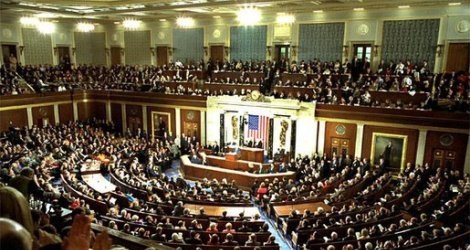
The House of Representatives of the U.S. Congress on Friday passed a bill to rescue the financial sector, which will provide the government with $700 billion to purchase bad debts from banks, thereby unblocking credit markets and halting the global decline in stock markets.

The amended bill was approved with 263 votes in favor and 171 against, a joint effort of the Republican administration of President George W. Bush and the Democratic majority in Congress, aimed at restoring confidence in the U.S. banking system.

The 450-page bill also includes $149 billion in tax relief for businesses and individuals.

With the approved funds, the Treasury Department will purchase illiquid assets from the balance sheets of banks and other financial institutions, primarily securities backed by bad mortgage loans and other troubled credit derivatives. The 450-page bill also includes $149 billion in tax relief for businesses and individuals.

"These steps represent a decisive action to alleviate the credit crunch that now threatens our economy," said President George W. Bush after the bill was passed. Shortly after the vote, the bill was delivered to Bush, who signed it before heading to St. Louis and then to his ranch in Crawford, Texas for the weekend. Bush praised "joint courageous action" in passing the bill to prevent the Wall Street crisis from becoming "a crisis in communities across America." "We have shown the world that the U.S. will stabilize its financial markets and maintain its leading role in the global economy," emphasized Bush.

The House rejected the original plan on Monday, leading to a record drop in the Dow Jones stock index of 778 points, prompting many representatives to change their minds.

‘The plan is not perfect, but it is certainly better than doing nothing.’

"It is about stopping the panic. The plan is not perfect, but it is certainly better than doing nothing. Now the Treasury Department needs to be very aggressive in purchasing a wide range of assets very quickly," said Adam Posen, deputy director of the Peterson Institute for International Economics in Washington.


The Dow Jones index rose over 300 points during trading on Friday, before later declining, and one hour before the market closed at 3 PM in New York, its gain was 136.44 points. The broader S&P 500 index rose by 1.22 percent, and the technology index Nasdaq by 1.09 percent. The Democratic majority leader in the House, Steny Hoyer, stated that the bill is "crucial for stabilizing the U.S. economy."

The bill was supported by 172 Democrats and 91 Republicans.

President Bush made more than a dozen phone calls, lobbying for the bill among Republican representatives, and similar efforts were made by presidential candidates Republican John McCain and Democrat Barack Obama, U.S. media reported. The bill was supported by 172 Democrats and 91 Republicans. When it was rejected on Monday, the bill had the support of 140 Democrats and 65 Republicans. A group of Republican congressmen attempted unsuccessfully to propose an alternative plan on Thursday night, which would have spent only $250 billion by the end of the year.

The disruption in the credit market has already begun to threaten local governments in the U.S.

The disruption in the credit market has already begun to threaten local governments in the U.S., as, for example, this week federal states managed to sell only about $700 million in bonds, which is 15 percent of the usual amount. California Governor Arnold Schwarzenegger on Thursday sent a letter to Treasury Secretary Henry Paulson informing him that his and other federal states may need emergency federal loans to finance government operations if the credit crisis continues. The industry has also supported the government’s bank rescue plan, for example, automobile manufacturers whose sales fell by 27 percent in September due to worsening credit conditions.

The Senate on Wednesday approved the government’s bill, adding about 50 pages of tax relief and other measures, including a temporary increase in the federal insurance limit for individual deposits in banks from $100,000 to $250,000. (Hina)

