
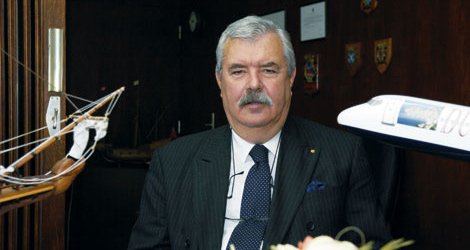
Compared to the previous cycle of low freight rates, the business of the Dubrovnik shipping company shows a drastic turnaround. Investments are being made in tourism and aviation, the fleet is being rejuvenated, and profits are being earned through ship trading.
Written by: Amir Kulenović
[email protected]
Photo: Mateo Rilović and
Lider Archive
Just under two weeks ago, analysts from Erste Bank published a report in which they set a target price for Atlantska plovidba shares at 2,786 kuna. This analysis was completed at a time when the price of Atlantska shares was 1,930 kuna, and the BDI index for dry bulk was over 4,900 points compared to this week’s around 3,000. Considering the unprecedented catastrophic events in the financial markets of the USA and Europe and the associated decline in stock prices of global as well as domestic shipping companies, it is certain that Erste’s analysis, if conducted today, would be considerably more cautious. It is ungrateful at this moment for any company to make long-term forecasts and predictions, but it can be said for the Dubrovnik shipping company that it should not fear at least the near future. Atlantska plovidba is a company that, taught by bad experiences from the past (it nearly collapsed during the previous bad period due to large losses), conducts its business policy more wisely and proactively than all our shipping companies. The fleet is being renewed, cash is being managed wisely, and debt levels are being monitored, and it is also very important that Atlantska is the only domestic shipping company trying to reorganize its business through diversification. In addition to the shipping business, the company holds majority stakes in the Lapad and Grand hotels, and its airline Dubrovnik Airline shows impressive growth rates compared to the sluggish national carrier.
Third quarter without decline
However, the fact is that this shipping company currently generates the highest profit in its core activity, which has been experiencing a boom in recent years. Freight rates for shipping companies transporting dry cargo are referenced to the BDI index, which reached its all-time high values in November last year and again in the middle of this year. In the last few weeks, the BDI has lost almost two-thirds of its value, but this fact will not have such negative effects on companies that employ a good portion of their vessels on long-term contracts rather than on the spot market. Among such companies is Atlantska, whose management states that the ratio between these two types of contracts is approximately equal, so the impact of the index’s decline will not be felt in the third quarter. Greater challenges in reaching previous profit levels can only be expected next year if the negative situation in the market continues in the future. Atlantska is also very actively rejuvenating its fleet. Just three years ago, the average age of the ships was 15 years, and today that average is much lower, with considerable profits achieved during the rejuvenation. Namely, the company ordered new ships at much lower prices while disposing of old ones during periods of high freight rates, which also affected the value of the ships it sold.
Thus, in the last quarter, it reported a profit almost three hundred percent higher than that in the same period last year, due to high freight rates and the sale of one ship, and similar effects can be expected in the third quarter, as the sale of another ship will be recorded then. Furthermore, three ships from the Atlantska fleet were sold in 2005, and they were immediately leased back from the buyers with the option to repurchase the same vessels at the price from 2005 this year and next year. Since the price at that time was much lower than today, it can be said that an excellent deal was made. Through this and other fleet rejuvenation operations, the company’s management has shown that it learned the lesson from 2002 when it was on its knees and did not think of such a form of generating income, but believed that the crisis could be overcome by pure freight income. Today, it seems that things are completely different. – We should reach one million tons of capacity for the first time in history by the end of next year, but we cannot say that this is some kind of strategic plan because our plan is to have 20-25 ships, and their total capacity will depend on the size of the ships within that number – says Ante Jerković, the CEO of Atlantska, about the company’s strategic plans.
Fleet rejuvenation
The company has a total of ten ships ordered, mostly from shipyards in China, which should rejuvenate the fleet, and the delivery pace is such that most should set sail by the end of next year, while four ships are to be delivered in 2011 and 2012, for which, analysts agree, stagnation in freight rates in the sector is forecasted. By then, the company will have a rejuvenated fleet that aligns with its long-term strategy, which will have lower costs than the current one and thus be able to achieve higher profit margins. However, in line with the changed business philosophy, Jerković and other board members are now not hesitant about some ad-hoc moments in business and take advantage of favorable opportunities when they arise. Recently, they took an order from another shipping company for a capesize vessel, which they have not had in their fleet until now. – Capesize ships are from the so-called industrial shipping where the shipowner is more long-term tied either to the exporter or to the importer of bulk cargo (ore, coal), whereby both contracting parties can count on stability in employment without special exposure to market whims.
Entering this size of ships (significantly larger tonnage, but the same number of crew members) also means fewer difficulties with the increasingly pronounced problem of a shortage of maritime personnel, so this could also mean a gradual transition to a new business strategy – says Jerković about the new ship, not ruling out a change in business strategy towards capesize vessels. Regarding the diversification of business through tourism and aviation, Atlantska, and this is also agreed upon by Erste’s analysis, say that they do not expect an increase in profits from these activities in this quarter. Despite the fact that the third quarter is the peak season for tourism in Dubrovnik, and the charter flights offered by their company are most in demand during the summer season, several facts that did not work in its favor have impacted the business of that part of the company. – I do not believe that the end of the tourist season and the results of the hotels and the airline will significantly reflect on the results for two reasons.



