
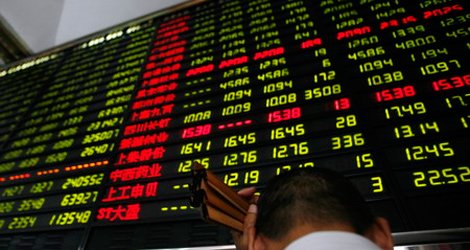
Stock prices on Asian exchanges rose this morning, as did oil prices and the US dollar, after the US central bank announced assistance to AIG to prevent a deepening financial crisis.
Investors on Asian exchanges reacted positively to the news that the Fed would grant American International Group an extraordinary loan of $85 billion, thus saving one of the world’s largest insurance companies from bankruptcy. However, the rise in stock prices is not substantial, što indicates that investors remain concerned about the banking sector. On the Tokyo Stock Exchange, the Nikkei index is currently up 0.9 percent, while the MSCI index of Asia-Pacific exchanges, excluding Japan, is currently up about 1 percent, having lost some of the previous gains that followed the news of assistance to AIG. After an initial rise, the Hang Seng index of the Hong Kong stock exchange fell 0.8 percent.
"I expect there will be a somewhat better mood in the market today after several very chaotic days," says Peter Hilton, an analyst at the Royal Bank of Scotland. After American investment bank Lehman Brothers declared bankruptcy on Monday, stock prices worldwide, including in Asia, fell sharply. The Tokyo Nikkei index plunged to its lowest level in three years on Tuesday, while the MSCI index hit its lowest level since 2006.
The AIG bailout should provide at least some relief to investors and stabilize financial markets, analysts say. It would also positively impact the markets if the Fed had lowered the key interest rate, što was expected given the panic in the markets. However, leaders of the US central bank left the key interest rate unchanged at 2 percent. "Risks from slowing economic growth and rising inflationary pressures remain concerning. Disruptions in financial markets have significantly intensified, while the labor market has weakened further. Tightening credit conditions, further declines in the real estate market, and slowing export growth will adversely affect economic growth in the coming quarters," it was stated after last night’s Fed meeting.



