
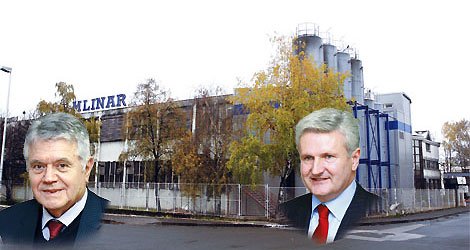
The twenty largest business groups had revenues of 126 billion kuna last year, which is about 45 percent of Croatia’s GDP. This ratio of power demonstrates the influence of large companies and their holding systems on the Croatian economy.
From the Leader’s journalistic kitchen, this issue smells delightful. We have prepared a rich menu seasoned with current and interesting stories.
The political games surrounding the energy strategy have been explored by Dragana Radusinović. In the article ‘Sanader postpones decision on building a new nuclear power plant until 2010?’, find out why Croatia is negotiating with Slovenia and, of course, what is happening with the location.
In times of rising inflation, pricing policy becomes a very important issue. Only companies operating in a weaker competitive environment follow the rise in raw material prices by raising the prices of their own products. Others suffer higher costs at the expense of their own profits because they cannot raise prices due to strong competition and a decline in customer standards. What are the experiences of our main managers from five companies explored by Hrvoje Mateljić?
In the topic of the week, Hrvoje Mateljić analyzed 20 groups and conglomerates that dominate the domestic economy. The twenty largest business groups had revenues of 126 billion kuna last year, which is about 45 percent of Croatia’s GDP. This ratio of power shows the influence of large companies and their holding systems on the Croatian economy, as well as the success achieved by companies that aggressively pursued acquisitions. Who are among the most powerful, find out in the new Leader.
Croatian cities lack 50,000 parking spaces. Ante Livajić dealt with the parking business and revealed where there is room for private investors and, of course, what the profit is.
Are you tired of rising fuel prices? Then the story by Matilda Bačelić about the Zagreb company developing a battery-powered car is just for you!



